Across jewellery markets, an interesting question is emerging around inherited jewellery: what happens when a piece carries enormous emotional value, but its design no longer belongs to the person who inherited it?
For many families, the answer has traditionally been to place it back in a safe or bank vault. The gold remains valuable, the gemstones remain precious and the memories remain attached to the piece but the jewellery itself gradually disappears from everyday life.
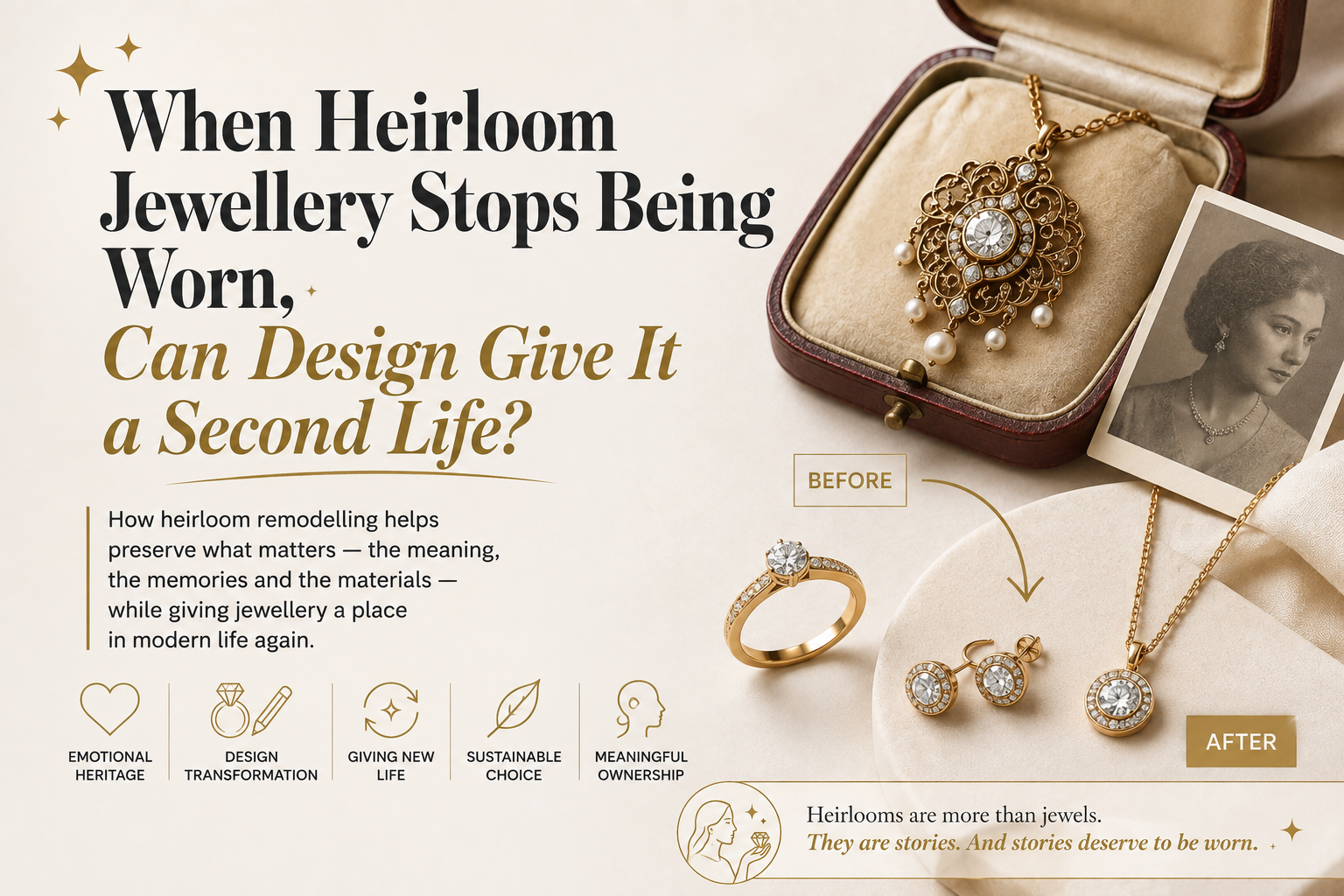
Hong Kong-based designer Eleanor Yeh, founder and creative director of Etra Fine Jewellery, is approaching that problem differently. Through bespoke design and heirloom remodelling, she works with clients to transform inherited jewellery into contemporary pieces while retaining the emotional significance of the original materials.
The philosophy behind the approach is what Yeh describes as “meaningful ownership”: jewellery should not simply be preserved because it has history; it should continue to have a place in the life of the person who owns it.
That distinction is important. An inherited necklace may represent a grandmother, a marriage, a family milestone or a particular chapter of someone’s life. Yet the original setting may belong to another era, making it difficult for the next generation to wear. The result is a peculiar contradiction: the jewellery is too meaningful to sell, but too disconnected from contemporary life to wear.
Remodelling offers a third possibility.
Rather than treating the inherited piece purely as an object to be preserved, the designer can reconsider its gemstones, metal and proportions and translate them into something that reflects the new owner’s personality. The original jewel is not necessarily reproduced; instead, elements of its material and emotional history become part of a new design.
For Yeh, that relationship between jewellery and the wearer is central to the medium itself. Unlike an artwork displayed on a wall, jewellery is physically experienced. It moves with the body, comes into contact with the skin and becomes part of everyday life. When a piece no longer feels connected to its wearer, it can eventually end up stored away rather than lived in.
This makes heirloom remodelling more than a design service. It reflects a broader change in how younger generations may understand inheritance.
The idea of preserving jewellery is gradually shifting from preserving the object exactly as it was to preserving what the object means.
A gemstone can move from a grandmother’s pendant into a daughter’s ring. Diamonds from an outdated necklace can become a pair of contemporary earrings. Gold from several inherited pieces can be reworked into a new jewel that carries the material history of an entire family while looking entirely at home in the present.
The practice also introduces an interesting dimension to jewellery’s sustainability conversation. Reusing existing precious metals and gemstones gives materials already in circulation another life, reducing the need to view every new jewel as something that must begin with newly mined or newly produced material.
But sustainability alone does not explain the appeal. The stronger motivation is emotional.
For someone inheriting jewellery, the decision is rarely simply about whether a piece is fashionable. It is about whether the person can see themselves wearing it without feeling that they are merely preserving somebody else’s style.
That is where contemporary remodelling becomes particularly interesting. The designer becomes less a maker of a new jewel and more an interpreter between past and present.
Etra’s approach reflects a larger question facing the luxury jewellery industry: how can heritage remain relevant when the people inheriting it have different aesthetics, lifestyles and ideas about luxury?
The answer may not always be to preserve the jewel unchanged.
Sometimes, the most meaningful way to honour an heirloom is to allow it to change.
Because a family jewel does not necessarily need to look exactly as it did in the generation before. What matters is that its story continues to be worn.